How to Get So Good at Valorant It Feels Like Smurfing
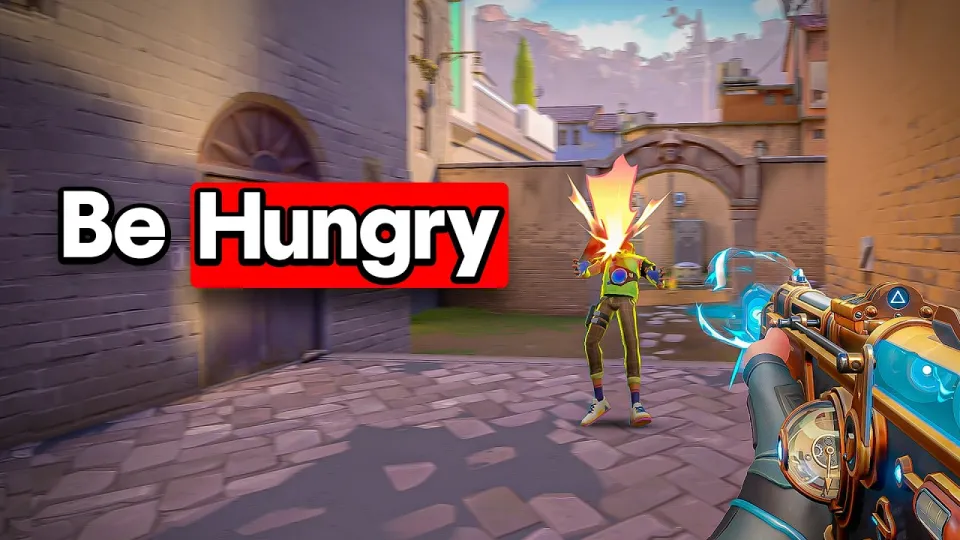
Video: How to Get So Good at Valorant it Feels Like Smurfing
You can order the same kind of articles for your own video to boost it on YouTube and Google. Just message the Telegram bot @sat_sit_bot. It writes articles around your video, embeds the video and publishes them on popular niche websites (no ads). Try it free: 50 articles on us.
· based on the channel Konpeki
Getting so good at Valorant that you look like a smurf is not about a secret sensitivity or a magic crosshair; it is about reacting to what the enemy actually does, staying unpredictable in every duel, and repeating simple fundamentals until they are automatic. Players who feel like smurfs in lobbies usually win the same fights the same way: they hold an angle, react to the peek, counter-strafe, and take a fight only when the numbers favor them. If you want structured help instead of guessing, Konpeki's Immortal Roadmap Program offers a guaranteed climb of 5 divisions in 10 weeks — you can apply for the Immortal Roadmap Program here and book a free call to see if you are a good fit.
What "feels like smurfing" actually means in Valorant
Smurfing is usually described as a high-rank player stomping lower-ranked lobbies, but the mechanical gap is smaller than people think. The real difference is decision quality: a smurf knows which duels to take, when to rotate, and how to punish a predictable opponent. In Valorant, a Diamond player and a Radiant player often have similar aim on a static target; the Radiant player simply takes fewer bad fights and converts more of the good ones. That is why the fastest way to feel like a smurf is not grinding aim trainers for hours, but fixing the habits that make your duels coin flips. The most common version of that habit is autopiloting: defaulting to the same site, the same angle, and the same timing every round, which lets better players read you instantly.
React to the enemy instead of running a script
The single most repeated takeaway from Konpeki's coaching content is that you should react to the enemy and stay unpredictable. Most players below Immortal play a pre-recorded round in their head: they entry the same way, swing the same corner, and expect the enemy to be where the plan says. Good players do the opposite — they gather information first, then decide. Practical ways to build that habit:
- Before every engagement, ask what the enemy has already shown. If their Jett has not used an Operator all half, assume she is holding a long angle.
- Change your timing by one or two seconds between rounds. A site hit at 0:45 and a site hit at 0:30 force different rotations.
- Play off your teammate's contact instead of forcing your own. Trade kills are the cheapest rounds in Valorant.
- When you lose a duel, note whether you lost it because of aim or because of position. Most losses are positional.
That last point is where most ranked players misdiagnose themselves. They queue another deathmatch, but the actual fix is standing somewhere that gives them a second option after the first shot.
Movement and counter-strafe fundamentals
Movement is the most underrated skill in Valorant and the one that most separates a smurf-looking player from an average one. You cannot shoot accurately while moving, so every duel is a rhythm of stop, shoot, move, stop. The players who look effortless have trained that rhythm until it happens without thinking. A simple drill structure:
- In the Range, strafe left and right with A and D while keeping your crosshair on a bot's head, firing only when your movement key is released.
- Practice the counter-strafe: tap the opposite key for a fraction of a second to kill your momentum instead of sliding into the shot.
- Add a movement-error multiplier in your settings if you want visible feedback on how much accuracy you lose while moving — a common community tip is to set the multiplier around 0.5 so the penalty is obvious without being unplayable.
- Do the same drill with a Sheriff or Guardian so that one missed shot costs you, which forces cleaner stops.
If you are unsure whether to hold the movement key down or release it on each shot, the answer is release: Valorant's accuracy model rewards a full stop, and the counter-strafe tap is what makes that stop fast enough to beat a peeker.
Crosshair placement and pre-aim habits
Crosshair placement is the cheapest source of free kills in Valorant, and it is the reason a smurf's aim looks better than it is. If your crosshair is already at head level on the correct angle, you only need a small adjustment when the enemy appears; if it is at chest height or staring at a wall, you need a full flick under pressure. Build placement habits deliberately:
- Keep the crosshair at head height even while rotating, not just while holding an angle.
- Pre-aim the most likely angle, but keep the second-most-likely angle within a small movement of your mouse.
- Clear angles in a consistent order so your teammate can trade you if you die.
- Reset your crosshair after every kill — most players die to the second enemy because they are still looking at the first one's body.
Combine placement with the reaction principle above and your duel win rate climbs without any change to your raw flick speed.
Make a plan, then keep it simple
A common complaint about coaching content is that every video says the same thing, and in a sense it does — because the fundamentals do not change. Valorant is closer to a team sport than a highlight reel: you make a plan, execute it with your team, and adjust when the enemy answers. The plan does not need to be complex. A single sentence like "we take mid control, then decide A or B off their rotation" is enough, as long as all five players know it before the barrier drops. Simplicity also makes your play harder to read: a team that runs three variations of the same setup is far more dangerous than one that runs ten half-learned ones. The same logic applies to your individual game — pick two agents, two roles, and two maps to master before you spread out.
Common questions from players trying to climb
Players working through this kind of material tend to raise the same doubts, and they are worth answering directly. One recurring question is whether you need a certain rank or age before joining a structured program; the honest answer is that programs usually care about your commitment and schedule more than your current rank, and you should ask the coach directly during the free call. Another is whether this advice applies to console players — the fundamentals of reaction, movement discipline, and crosshair placement translate, but the input differences mean you should adjust drill intensity rather than skip them. A third is the frustration of teammates who seem to be bots; you cannot fix their decisions, but you can reduce how much their mistakes cost you by playing trades and avoiding solo entries. Finally, players often ask whether they should copy a pro's sensitivity or settings — settings are personal, and the only settings that matter are the ones you can repeat consistently under pressure. Konpeki's Discord hosts free coaching resources and office hours if you want these questions answered in a live setting.
Useful links
- Immortal Roadmap Program application
- Konpeki's Discord — free coaching resources and office hours
- Konpeki on Twitch
- Konpeki on Twitter
- Konpeki on TikTok
The bottom line on playing like a smurf
Becoming good enough at Valorant to look like a smurf comes down to reacting instead of scripting, moving with discipline, placing your crosshair before the fight starts, and keeping your plans simple enough to repeat. None of these require talent; they require reps and honest review of why you died. Konpeki's breakdown makes the same point from a coaching perspective: the players who climb fastest are the ones who simplify, not the ones who add more tricks. If you want that process guided rather than self-taught, the Immortal Roadmap Program is the entry point Konpeki recommends, with limited slots and a free call to check fit. Watch the full video from Konpeki for the on-screen examples that pair with these habits.
Key takeaways
- The core of a "smurf-like" game is reacting to the enemy instead of running a fixed script, and staying unpredictable in every duel.
- Movement and counter-strafe discipline matter more than raw flick speed: stop, shoot, move again.
- A simple pre-round plan beats a complicated one — Valorant rewards repetition of fundamentals over highlight plays.
- Konpeki's Immortal Roadmap Program advertises 5 divisions in 10 weeks with a guaranteed result via roadmap.gg.
- Free coaching resources and office hours are available in the coach's Discord community.
Source: How to Get So Good at Valorant it Feels Like Smurfing · Markdown version
Questions & answers
How long does it take to get good enough at Valorant to feel like a smurf?
There is no fixed timeline, but players who focus on reaction, movement discipline, and crosshair placement usually see a visible jump within a few weeks of consistent practice. Structured programs such as Konpeki's Immortal Roadmap advertise 5 divisions in 10 weeks, which gives a rough sense of what focused coaching can compress. Raw aim improves slowly; decision-making improves fast.
Should I hold my movement key down or release it when shooting in strafe drills?
Release it. Valorant only gives you full accuracy when you are standing still, so the drill is to strafe, tap the opposite key to counter-strafe, and fire the moment your momentum stops. Holding A or D while shooting just trains a bad habit that costs you duels in ranked.
Does this advice work for console players on PS5 or Xbox?
The core principles — reacting to the enemy, unpredictable timing, crosshair placement, and simple plans — apply on console as well. The input method changes how fast you can adjust, so scale drill intensity and expect a different learning curve. If you want specifics, ask a coach directly, since console coaching availability varies.
Do I need a minimum rank or age to join a Valorant coaching program?
Requirements vary by program, and most coaches care more about your schedule and willingness to review your own games than about your current rank. Age policies exist for some paid programs, so it is worth asking before you apply. The free call that Konpeki offers is designed to answer exactly these fit questions.