Marvel Rivals Hardstuck Claims Under Review
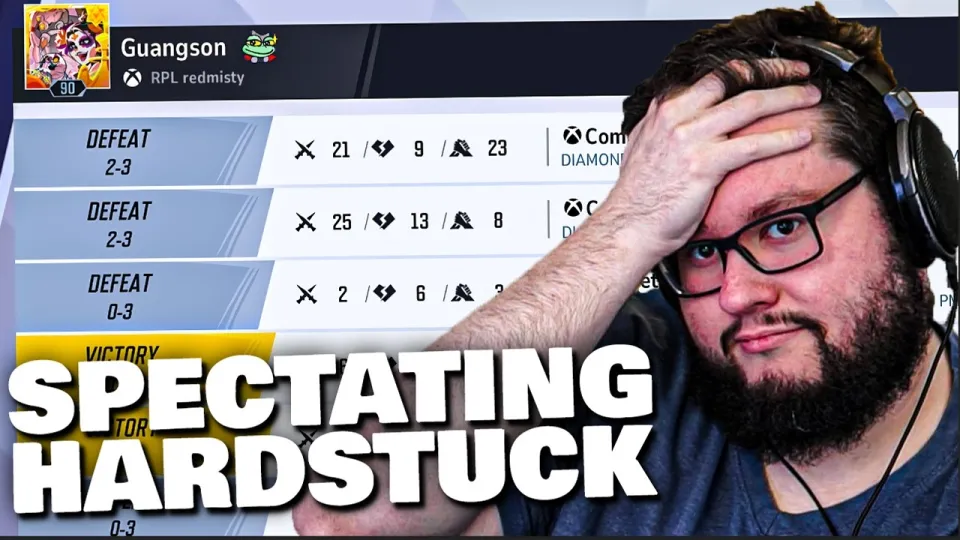
Video: I Spectated Someone Who Claimed To Be Hardstuck In Marvel Rivals
You can order the same kind of articles for your own video to boost it on YouTube and Google. Just message the Telegram bot @sat_sit_bot. It writes articles around your video, embeds the video and publishes them on popular niche websites (no ads). Try it free: 50 articles on us.
· based on the channel Flats
A Marvel Rivals player who claimed to be hardstuck blamed his teammates, but a single spectated match showed the problem was his own play. Flats reviewed the footage live on his Twitch channel, and the session turned into a case study in how ego, poor positioning and one-trick habits keep a player stuck in Grandmaster despite a negative win rate.
What the Marvel Rivals hardstuck claim actually meant
The player opened by insisting his rank was not his fault: he was, in his own words, held back by the teammates the matchmaker kept handing him. Flats took the claim at face value and spectated a live match rather than arguing, which is the format that makes these reviews useful. The result was less a debate about matchmaking and more a checklist of avoidable mistakes, each one visible from the spectator camera within seconds.
The player was sitting in Grandmaster, a tier that in Marvel Rivals still contains players with shaky fundamentals. That gap between rank and skill is the core of the story: a player who has climbed far enough to believe he belongs there, but who still makes decisions a Gold player would be coached out of.
The Dagger played as Cloak problem
The most obvious issue was the hero choice: the player locked Dagger and spent most of the match as Cloak, treating the support slot as a damage role. In Marvel Rivals, Cloak & Dagger is a stance-switching support, and the value comes from cycling between them, not from parking in one form. Dagger's healing daggers, her light-force veil and her healing dome are what keep a team alive; Cloak's kit is for finishing kills, escaping with Dark Teleportation and setting up Terror Cape so allies' damage lands.
Playing Dagger as Cloak means the team fights every engagement without sustained healing, and it also means the player's own ultimate, which benefits from proper Dagger uptime, arrives late or not at all. Viewers picked up on this immediately, and the joke that the player was "playing Dagger, hold the Cloak" describes the problem better than any stat line could.
Positioning mistakes that cost the match
Flats' review kept returning to small, concrete errors rather than big dramatic ones:
- Walking past a health pack while visibly looking for healing, a moment that needs no commentary to land.
- Using Cloak's invisibility as a panic button to escape pressure instead of as a tool to reposition the team or set up a pick.
- Holding high ground badly, then dropping into the open when the enemy team had already committed cooldowns.
- Burning the ultimate after the fight was lost instead of using it to win the fight.
Each of these is fixable in isolation. Together they explain why the player's stats look acceptable while his win rate does not.
Why a negative win rate still climbs in Marvel Rivals
One of the most repeated points around this clip is that the player had a losing record and still reached Grandmaster. Marvel Rivals uses a rank system with protection and point-based progression, so a player who grinds enough games can move up even while losing more than he wins. That design is friendly to casual players, but it also means rank alone is a weak signal of skill, and it inflates the confidence of players who have not actually improved.
The practical takeaway for anyone climbing: track your win rate and your per-match impact, not just your badge. If you are losing more than you win and still ranking up, the system is carrying you, and the moment the matchmaker stops being generous you will stall hard.
Typical questions from viewers about the clip
Spectators raised a few recurring doubts. The first is whether the player's teammates really were the problem; the review showed a match where the player's own decisions created the losses he blamed on others. The second is whether a Dagger main can carry at all, and the answer is yes, but only by healing first and switching to Cloak for short, deliberate kill windows. The third is whether this is a Marvel Rivals problem specifically: rank inflation exists in other hero shooters too, but Marvel Rivals' progression curve makes it easier to reach high tiers without fixing fundamentals.
A fourth theme is ego. Several viewers noted that the player's Spider-Man background explained a lot, since dive-hero habits like solo flanks and blaming the backline translate badly to support. Flats' approach is not to humiliate the player but to show, frame by frame, what a coach would change.
What to fix if you feel hardstuck in Marvel Rivals
If you recognise yourself in this review, start with three changes. First, play your hero's actual role: on Cloak & Dagger, default to Dagger, heal, and switch to Cloak only to finish a target or escape. Second, review one replay per session and count how many times you ignored a health pack or died with an ultimate available. Third, stop attributing losses to teammates until you can name your own mistake in the last fight you lost.
Those habits matter more than any tier list. Marvel Rivals rewards players who understand their kit's cooldown rhythm, and no amount of grinding fixes a support who never heals.
Where to watch the full breakdown
Flats is the author of this Marvel Rivals spectate breakdown, and the full session is worth watching for the commentary alone, including the running joke about the player's invisibility getting a pep talk before being sent back into the fight. If you want more live reviews, ranked coaching and hero-shooter analysis, watch Flats on Twitch and catch the next spectate stream as it happens.
Key takeaways
- Flats spectated a Marvel Rivals player who insisted his rank was held back by teammates, not his own play.
- The player was in Grandmaster, a rank where basic mistakes like ignoring a nearby health pack stood out.
- The accused main was Dagger, played almost entirely as Cloak, with invisibility used as an escape rather than a setup tool.
- The player had a negative win rate yet kept climbing, which viewers blamed on Marvel Rivals' rank inflation.
- Flats' breakdown ended with the player's positioning and ultimate usage held up as the real reason for the stall.
Source: I Spectated Someone Who Claimed To Be Hardstuck In Marvel Rivals · Markdown version
Questions & answers
Was the player in the clip actually hardstuck because of teammates?
No. The spectated match showed the player making the same avoidable mistakes repeatedly: ignoring health packs, wasting ultimates after fights were decided and playing Dagger almost entirely as Cloak. Teammates were not the limiting factor in that game, though the player framed it that way from the start.
Why is playing Dagger as Cloak a problem in Marvel Rivals?
Cloak & Dagger is a support whose healing comes from Dagger's daggers, veil and healing dome, while Cloak's kit is built for finishing kills and escaping. Staying in Cloak form starves the team of healing and delays the ultimate, so the team loses long fights even when the player's damage numbers look fine.
How can a player have a negative win rate and still be Grandmaster?
Marvel Rivals' ranked progression includes point gains and rank protection, so a player who queues enough games can climb even while losing more than winning. That makes rank a weak indicator of skill and explains why some high-tier players still lack basic fundamentals.
What should a hardstuck Marvel Rivals player change first?
Start with role discipline: heal as Dagger by default and switch to Cloak only for short kill or escape windows. Then review one replay per session, count deaths with an ultimate available and stop blaming teammates until you can name your own mistake in the last lost fight.